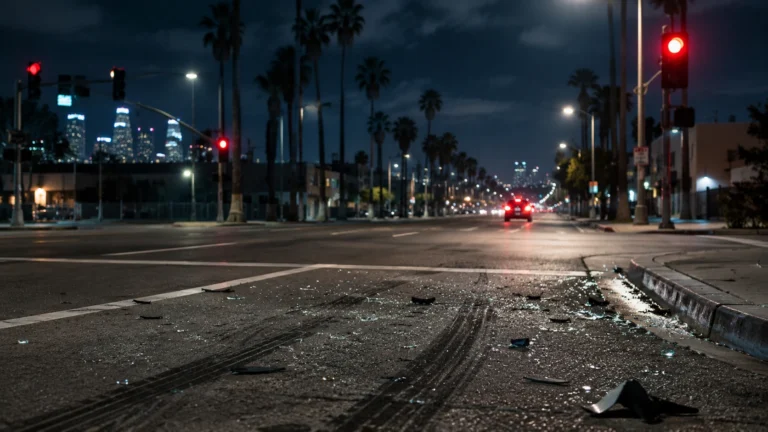
Los Angeles is not one place. It is dozens of distinct neighborhoods with very different traffic patterns, road designs, and crash risks. A driver in Eagle Rock faces different problems than one in Van Nuys. The flow on Pasadena’s Colorado Boulevard does not look much like the flow on Sherman Oaks’s Ventura Boulevard. The crash data reflects all of that.
This article walks through how to read LA’s public crash data by neighborhood, which areas tend to show up in the worst categories, and how neighborhood-level patterns can affect your insurance claim if you are hit.
Where the Data Lives
LA has more public crash data than almost any other large American city. Three sources cover most of what you need.
The Statewide Integrated Traffic Records System (SWITRS) is the master database. Every police agency in California submits crash reports here. UC Berkeley’s SafeTREC center runs the free Transportation Injury Mapping System (TIMS) that lets anyone pull SWITRS data filtered by year, severity, crash type, and location.
LA Vision Zero publishes the High Injury Network, the city’s map of where the most serious crashes happen. Vision Zero’s annual progress reports break down crash trends across LA’s districts.
The California Office of Traffic Safety (OTS) publishes an annual ranking that compares cities of similar size on dozens of crash categories: fatal crashes, alcohol-involved crashes, pedestrian crashes, motorcycle crashes, hit and run, and more. The OTS rankings are useful for comparing LA to other cities and tracking year-over-year change.
What the Neighborhood Patterns Look Like
A few patterns recur across LA neighborhoods.
Dense urban centers (DTLA, Koreatown, Hollywood, Mid-City) produce high total crash counts but tend to have lower fatality rates. The reason is speed: cars in dense areas move slower, so impacts are less severe even when they happen more often. The injuries are still real, but they skew toward soft tissue, broken bones, and concussions rather than fatalities.
Wide arterial neighborhoods (parts of South LA, the San Fernando Valley, Eagle Rock along Eagle Rock Boulevard and Colorado Boulevard) see more severe crashes per total crash. The combination of higher speeds and pedestrian activity drives up fatal and serious-injury numbers.
Commuter corridors (Burbank, Glendale, Pasadena, Sherman Oaks, North Hollywood) see crash patterns built around rush hour. Rear-end collisions are the most common type. Truck-involved crashes appear more often on the routes near commercial centers.
Hillside and curve-heavy areas (Mt. Washington, parts of Hollywood Hills, the Pasadena foothills) have lower total crash counts but a higher share of run-off-road and single-vehicle crashes.
High-pedestrian areas (Hollywood Boulevard, parts of Westwood, the Eagle Rock village core) produce the most pedestrian-vehicle crashes per capita.
San Fernando Valley vs Westside vs Eastside
Three broad LA regions tell different stories.
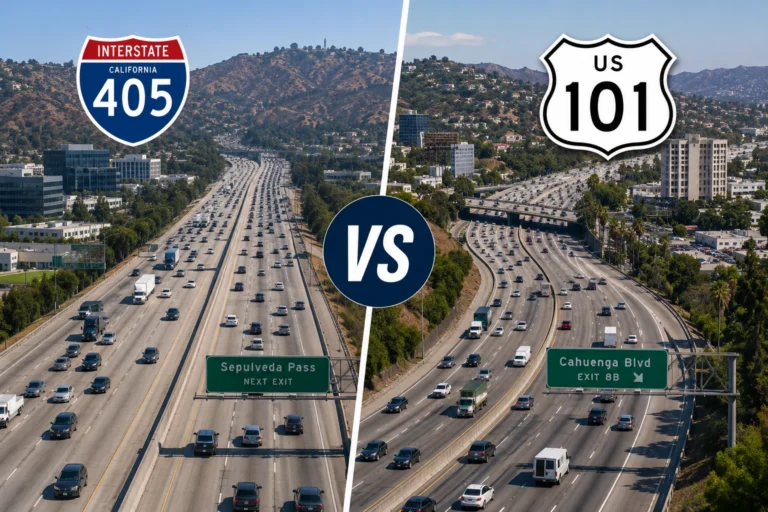
The San Fernando Valley sees a higher share of freeway-related crashes (the 405, the 101, the 5, and the 170 all run through it), plus a steady flow of arterial crashes on the long east-west boulevards. Van Nuys, North Hollywood, and Sherman Oaks tend to rank high for total crash volume.
The Westside (West LA, Brentwood, Santa Monica adjacent, Westwood) sees fewer total crashes per capita but tends to have higher property damage values because of vehicle type and density. Traffic congestion produces a steady flow of low-speed fender benders.
The Eastside (Eagle Rock, Highland Park, El Sereno, Boyle Heights, Lincoln Heights) sits between the two. The combination of older infrastructure, narrower streets, and dense neighborhoods produces a mix of crash types. Eagle Rock’s two main arterials (Eagle Rock Boulevard and Colorado Boulevard) consistently appear in crash reports.
Why Neighborhood Data Matters for Your Claim
Insurance companies value cases partly based on what they think a jury would do. Jury behavior varies by venue. A jury pool drawn from a neighborhood with high pedestrian traffic and lots of personal experience with cyclists may view a driver-vs-pedestrian case differently than a jury pool drawn from a freeway-heavy commuter area.
Beyond jury composition, neighborhood-level data can support your case in three ways.
Establishing the foreseeable risk. If you were hit on a corridor that already shows up in the High Injury Network, the at-fault driver cannot reasonably argue that the crash was a one-off freak event. The data shows it was not.
Pushing back on fault assignments. If the insurance company tries to argue you contributed to the crash, the documented patterns of the area can show that the crash type was driven by the road design or the at-fault driver’s choices, not by you.
Identifying additional defendants. Some neighborhood-specific crash patterns (truck routes, commercial loading zones, school zones) point to additional potentially-responsible parties: the trucking company, the property owner, the school district. Our trucking accident lawyer page covers some of these multi-defendant situations.
What to Do If You Are Hit Anywhere in LA
The steps are the same regardless of neighborhood:
- Call 911 and get a police report on scene if injuries are involved
- Photograph the scene, the vehicles, and any visible injuries
- Get the other driver’s insurance and license information
- Look around for witnesses and surveillance cameras (most LA blocks have at least one nearby business with cameras)
- Get medical attention even if you feel okay, because adrenaline hides injury
- Be careful about what you say to the other driver’s insurance company
If you live in or were hit in Eagle Rock, Glendale, Pasadena, Burbank, Van Nuys, or anywhere else in the LA area, the legal rules are the same throughout California. What changes is the local context that shapes your case: which courts you might file in, which juries you might face, and which evidence sources are available.
The Local Lawyer Advantage
Personal injury lawyers based in LA understand the city’s neighborhoods in ways that out-of-area firms simply do not. The lawyer who has tried cases in LA Superior Court’s Stanley Mosk courthouse, the Van Nuys courthouse, and the Burbank courthouse knows how those venues operate. The lawyer who has dealt with LAPD reports, Glendale PD reports, and Pasadena PD reports knows what each agency tends to include and leave out.
That local knowledge translates directly into case results. The lawyer who knows which Eagle Rock intersections show up in Vision Zero data, which Van Nuys medical providers have a track record of working with PI patients, and which Burbank claims adjusters tend to settle vs litigate is the lawyer who builds stronger files.
At Ask Hamlet, our personal injury practice covers all of Los Angeles. Our office sits in Eagle Rock, which gives us direct familiarity with this side of the city. We also handle car accident cases across Glendale, Pasadena, Burbank, Van Nuys, North Hollywood, and the broader San Fernando Valley.
If you have been hit in Los Angeles and are unsure how to read your case, contact us for a free case review. There is no obligation, and we charge nothing unless we win.