A driver in California has to leave at least three feet between the car and your bicycle when passing. That rule is Vehicle Code section 21760, known as the Three Feet for Safety Act.
It became law in September 2014. Since January 2023, a driver also has to change lanes to pass a cyclist when another lane is open and the move is safe.
What does the three foot rule say?
The three feet is measured from any part of the car to any part of the bike or the rider. A side mirror counts, and so does your elbow.
Traffic or a narrow road can make three feet impossible. In that case the driver has to slow down and may pass only when doing so will not put the rider in danger.
Do drivers have to change lanes to pass?
Yes, on a road with two or more lanes going the same way, when a lane change is safe and legal. That part of section 21760 took effect on January 1, 2023.
A driver who squeezes past in your lane while the next lane is empty skipped a step the law requires. That fact helps a claim.
Does a close pass count if the car never touched you?
A close pass with no contact can be a traffic violation, and a claim needs an injury on top of it. Many injury claims start with a car that clipped a handlebar.
Others start with a rider who swerved into a parked car to get out of the way. A crash with no contact can be the driver’s fault too, when the pass is what put you on the ground.
Why does a broken traffic law help your case?
California has a rule for this in Evidence Code section 669. When a driver breaks a safety law and causes the harm that law was written to prevent, the law presumes the driver was careless.
Section 21760 exists to protect cyclists from close passes. A driver who broke it and hit you starts the case with that presumption against them. It is then on the driver to prove an excuse.
Do cyclists have to ride in the bike lane?
Mostly, with exceptions. Under Vehicle Code section 21208, a rider going slower than traffic uses the bike lane. The rider may leave it to pass, to turn left, or to avoid debris and other hazards.
Section 21202 covers streets with no bike lane. A rider may use the full lane when it is too narrow for a bike and a car to share side by side.
Who pays when a driver hits you on a bike?
The driver’s auto insurance usually pays first. If the driver has no insurance, your own auto policy’s uninsured motorist coverage can apply, even though you were on a bike.
Bring your own policy to the first meeting. Health insurance and medical payments coverage can also help with bills while the claim moves forward.
How this plays out in Los Angeles
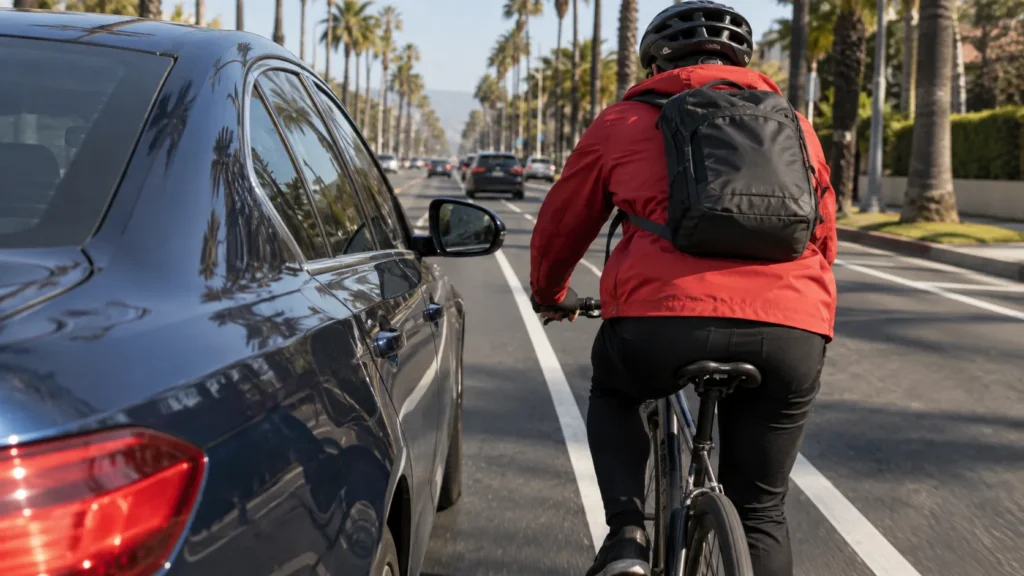
Many streets here have a bike lane painted between fast traffic and a row of parked cars. On those streets, a car driving on the lane line can pass within inches of a rider.
On a narrow street with parking on both sides, there may be no room for three feet at all. The law’s answer is that the driver slows down and waits.
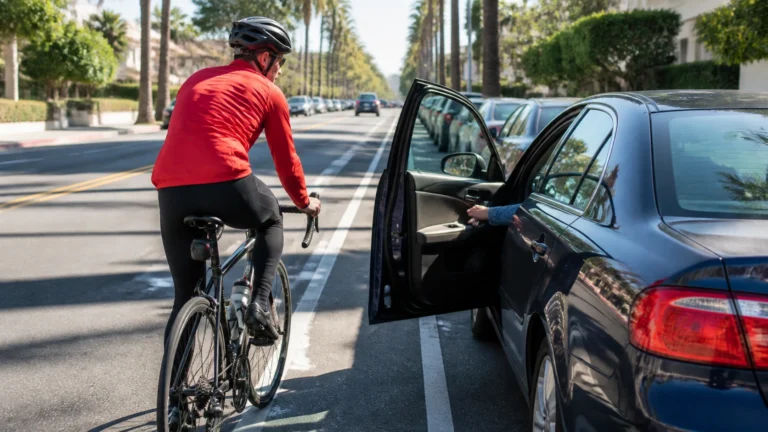
If the crash came from a car door opening in front of you, different rules apply. Our guide to dooring accidents and who is at fault covers that case.
What to do after a close pass or a crash
- Call the police and ask for a report.
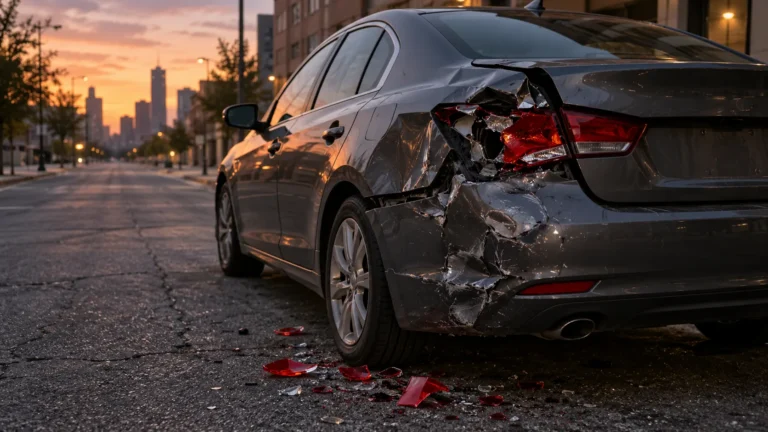
- Photograph the car, its side mirror, your bike and the road.
- Save any video from your bike camera, a dash camera or a nearby business.
- Get the names and numbers of witnesses.
- See a doctor the same day.
Ask whether the driver broke the three foot rule
We can look at the report, the photos and any video, and tell you whether the pass broke section 21760. We can also tell you which insurance policy should pay.
There is no fee to ask, and no fee unless we win. Here is how we work as a bicycle accident lawyer in Los Angeles, and how to reach our team in English, Spanish or Armenian.