Every LA driver has an opinion about which freeway is worse. Some swear by the 405. Some say nothing beats the 101 for a bad commute. A few will argue for the 5, the 10, or the 110 just to be different.
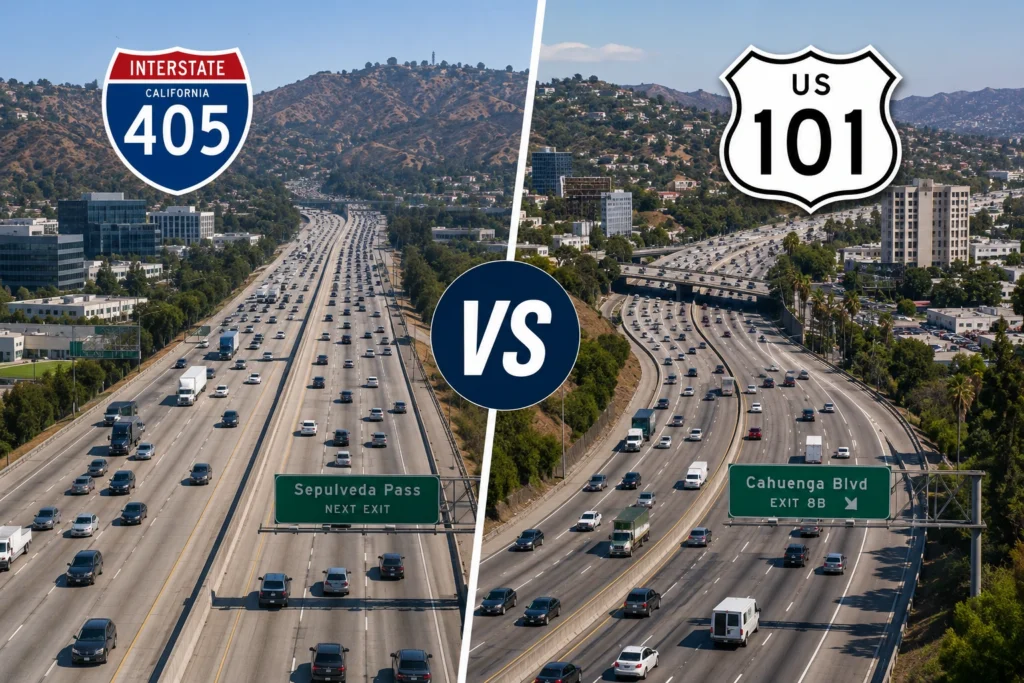
The data offers a partial answer. Both the 405 and the 101 show up consistently in crash statistics, but for very different reasons. The 405 is longer, carries more cargo traffic, and sees more freeway truck crashes. The 101 has tighter curves, more elevation changes, and a higher share of crashes in pedestrian-adjacent zones near Hollywood and Echo Park.
This article walks through what the public crash data shows about each freeway and what those patterns mean if you have been hit on either one.
How LA Tracks Freeway Crashes
California pulls freeway crash data from three main sources.
The Statewide Integrated Traffic Records System (SWITRS) collects police reports from CHP and local agencies. UC Berkeley’s TIMS portal makes the data publicly searchable by freeway segment, milepost, and year.
The California Highway Patrol publishes its own segment-level reports as part of the SAFER program. These reports identify the most dangerous freeway segments statewide and break down crashes by type.
The Caltrans Performance Measurement System (PeMS) tracks traffic volumes, which lets analysts adjust for the difference between a high-volume freeway with many crashes and a low-volume freeway where each crash counts proportionally more.
What the 405 Looks Like
The 405 (San Diego Freeway) runs from Long Beach to the San Fernando Valley, a distance of about 72 miles. Daily traffic volumes regularly exceed 350,000 vehicles on the busiest segments.
The 405’s crash patterns are shaped by three factors:
Length and volume. With 72 miles of freeway and traffic counts as high as any in California, the 405 produces a high total number of crashes simply because of exposure.
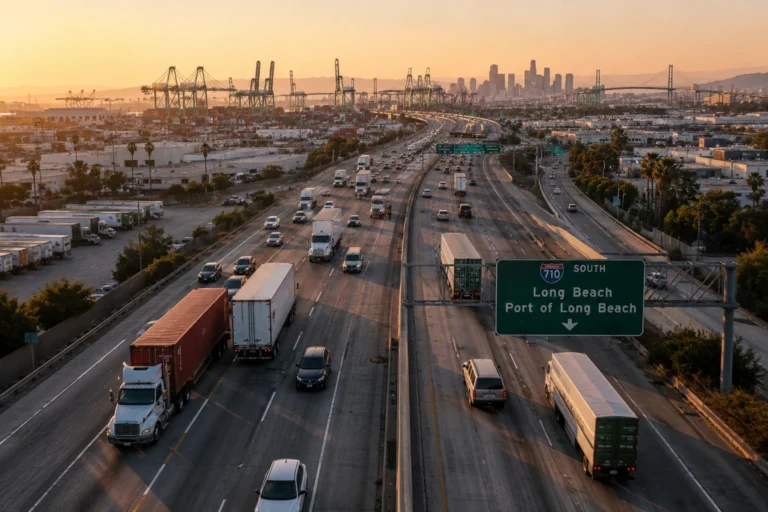
Cargo and commercial traffic. The 405 carries significant commercial traffic between the South Bay logistics zone and LAX. Truck crashes are more common on the 405 than on the 101.
Sepulveda Pass. The segment between Westwood and Sherman Oaks, through the Santa Monica Mountains, is one of the most-traveled and most-crashed freeway segments in California. The combination of grade changes, on-ramps, off-ramps, and high speeds produces a steady flow of crashes.
The most dangerous 405 segments based on multi-year SWITRS data tend to be:
- The Sepulveda Pass between Sunset Boulevard and the 101 interchange
- The LAX area between Century Boulevard and Manchester
- The 405/22 interchange in Seal Beach
- The 405/110 interchange near Carson
What the 101 Looks Like
The 101 (Hollywood Freeway and Ventura Freeway) is shorter in the LA region but carries equally high volumes through dense urban segments. The freeway runs from downtown LA through Hollywood and the Cahuenga Pass into the San Fernando Valley, then west through Sherman Oaks, Encino, and Woodland Hills.
The 101’s crash patterns reflect different conditions:
Tighter geometry. The 101 through downtown and Hollywood has narrower lanes, shorter merge zones, and tighter curves than most LA freeways.
Pedestrian-adjacent zones. The freeway runs through and underneath some of LA’s densest pedestrian areas. Off-ramps into Hollywood, Echo Park, and downtown drop drivers into immediate city traffic, which contributes to crashes near the exits.
Cahuenga Pass. The segment between Hollywood and the Valley climbs through the Cahuenga Pass with multiple sharp curves and grade changes. Speed differentials, lane changes, and the merge with the 134 produce a known crash cluster.
The most dangerous 101 segments tend to be:
- The Cahuenga Pass between Highland Avenue and the 134 interchange
- The downtown segment through the four-level interchange
- The Hollywood segment near the Vine Street and Highland exits
- The Sherman Oaks segment near the 405 interchange
The Direct Comparison
A few specific comparisons help clarify the differences.
Total crashes: The 405 generates more total crashes simply because it is longer and carries higher absolute volume.
Crashes per mile: Comparable, with the 101’s downtown and Hollywood segments approaching or exceeding the 405’s worst stretches.
Fatal crashes: The 405’s higher truck volume contributes to a higher count of fatal crashes per year.
Property damage only: The 101’s tighter geometry produces more low-speed fender benders proportionally.
Pedestrian-involved crashes on adjacent streets: Higher near the 101’s downtown and Hollywood exits.
The honest answer to “which is worse” depends on what you mean by worse. The 405 generates more crashes by volume. The 101 generates more dense-urban crash patterns that include adjacent street incidents.
What These Patterns Mean for Your Case
A few practical implications.
Truck crashes are more likely on the 405. If you were hit by a commercial vehicle on the 405, the case is likely to involve commercial truck litigation with federal regulations and multiple defendants.
Multi-vehicle crashes are common on both. Freeway speeds plus heavy congestion produce chain-reaction crashes. Each driver’s fault percentage gets weighed, which affects every claimant’s recovery under California’s pure comparative fault rule.
Surveillance footage exists. Most freeway crashes get captured by Caltrans cameras or by adjacent business cameras. The footage is available for a limited time, often 30 to 60 days, before being overwritten.
Police reports matter. Freeway crashes generate detailed CHP reports. These reports are usable evidence and they identify witnesses by name.
Other LA Freeways to Watch
The 405 and the 101 are not the only freeways with documented crash clusters. A few others deserve a mention:
- The 5 (Golden State and Santa Ana freeways) through the Newhall Pass and the East LA interchange
- The 110 (Harbor Freeway) through downtown and the four-level
- The 10 (Santa Monica and San Bernardino freeways) through East LA and the 405 interchange
- The 134 (Ventura Freeway) through Glendale and Pasadena
- The 170 (Hollywood Freeway extension) through North Hollywood
Crashes on any of these can be approached the same way as crashes on the 405 or 101. The freeway changes the data pattern, but the legal rules are the same.
When to Talk to a Lawyer
If your freeway crash involved:
- Any injury beyond minor property damage
- A commercial truck or rideshare driver
- Multiple vehicles
- Disputed liability
- An insurance company offering less than your medical bills
Talking to a personal injury lawyer is worth your time. Most consultations are free and last 15 to 30 minutes. If your case does not need representation, an honest lawyer will tell you. If it does, you will leave the consultation with a clearer picture of what your case is actually worth.
At Ask Hamlet, our team handles car accident cases on every major LA freeway. We have specific experience with crashes on the 405, the 101, and the surrounding interchanges.
Freeways are only part of the risk. Surface streets have their own trouble spots, which we map in our guide to the most dangerous intersections in Los Angeles.
If you have been hit on a freeway and the insurance company is treating your case like a minor incident, contact us for a free review. There is no obligation. We do not charge anything unless we win.