The first settlement offer almost always feels insulting. Your medical bills total $25,000. You missed two months of work. You still have headaches when you try to read. And the adjuster’s offer is $9,000. Maybe $12,000 if they sense you might walk away.
Here is what most accident victims do not realize: that offer is not a mistake. The adjuster did not lowball you because they misread the file. The offer reflects a specific strategy. The strategy has one goal: get you to take it.
The Business Math Behind the Lowball
Insurance is a numbers business. Carriers receive premium dollars from policyholders, set aside a portion for expected payouts, and try to keep as much of the rest as profit. The math works only if total payouts stay below total premiums.
That gives carriers a clear incentive to underpay claims when they can. If a carrier pays full value on every claim, the math breaks. If the carrier pays underneath full value on a meaningful share of claims, the math works.
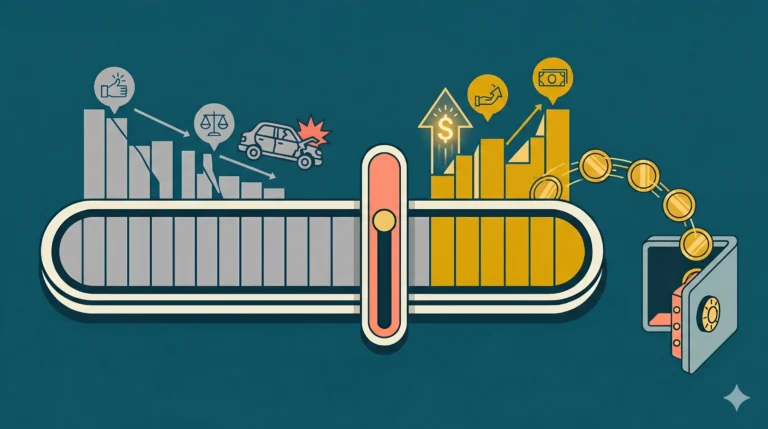
The lowball offer is the lever that controls which side of that math the carrier sits on. Every claim that settles at 40 percent of true value subsidizes the claims that settle at 100 percent. The business cannot exist without lowball offers being accepted regularly.
What the Carrier Hopes You Will Do
The lowball offer is built around three hopes.
Hope one: you need the money. Six weeks into recovery, with medical bills piling up, no paychecks coming in, and the kids needing school supplies, $9,000 looks like a lifeline. The adjuster knows this. The longer they delay, the more financial pressure builds, the more attractive a lowball becomes.
Hope two: you do not realize the case is worth more. Most people have never had a serious injury claim. They have no reference point for what their case should settle at. If $9,000 sounds reasonable on the phone, many people accept.
Hope three: you do not want a fight. Personal injury claims take energy. The phone calls, the paperwork, the medical appointments, the negotiations. Many people would rather take less money than spend another six months fighting. The adjuster banks on this too.
If any one of those three hopes lands, the file closes at the lowball amount and the carrier wins.
The Adjuster Phrases You Should Recognize
A few sentences come up so often they read like a script.
“This is our final offer.” It is almost never the final offer. Authority limits exist for a reason, and supervisors have higher numbers available. “Final offer” is a closing technique, not a real ceiling.
“If you get a lawyer, you will end up with less.” This argument never made financial sense and it still does not. Industry studies have consistently shown that represented claimants recover substantially more, even after attorney fees. If the carrier truly believed lawyers got you less, they would encourage you to hire one. They do the opposite.
“Your case has problems we have to discount for.” Sometimes the problems are real. Often they are imagined or exaggerated. The adjuster’s job includes finding reasons to reduce the offer. Push back and ask for specifics.
“We can pay you today if you sign now.” Speed is a pressure tactic. The check that arrives today is smaller than the check that arrives in six months after proper negotiation.
“You should focus on getting better and not on legal stuff.” A wholesome-sounding sentence with a very specific goal: convince you to let the adjuster handle the case (in the adjuster’s favor) instead of getting a lawyer.
“Medical treatment beyond this point may not be covered.” Often used to scare people into settling before their treatment is finished. Premature settlement is one of the worst mistakes you can make.
Why Delay Works in the Carrier’s Favor
Time is one of the carrier’s strongest tools. The longer a claim stays open without resolution:
- Your medical bills keep arriving
- Your lost wages keep adding up
- Your savings keep depleting
- Your psychological pressure to settle keeps building
- Your memory of the crash details fades
- Your witnesses become harder to reach
- Your surveillance video gets overwritten
None of those work against the carrier. Most of them work against you. So adjusters often respond slowly, request the same documents twice, or “lose” paperwork that needs to be resent.
You can counter this with documentation. Keep a log of every call, every request, every document sent. Send everything by email when possible. The paper trail itself can support a bad faith claim if the delays cross a legal line. A car accident attorney familiar with California bad faith law can walk you through whether your situation qualifies.
Reserves: What the Carrier Already Knows
Inside the insurance company, your file has a number on it that you never see. It is called the claim reserve. The reserve is what the carrier has set aside internally to pay your case.
Reserves are based on the adjuster’s actual estimate of case value, plus a margin. They are not the lowball offer. They are usually significantly higher than the offer.
When a lawyer enters a case and starts pushing back, one of the things that often happens is the reserve gets raised. The adjuster updates their estimate based on the new evidence and the new credibility of the file. The offer then moves up to match.
You will never see the reserve directly. But you can sometimes see its existence in the way the offer moves. Big jumps in offer (from $10,000 to $35,000, for example) usually mean the reserve was higher than the lowball all along.
When a Low Offer Is Actually Fair
A few situations where a low offer might genuinely reflect the case:
- The injury is minor and fully healed
- Liability is genuinely disputed and the carrier has a credible defense
- The at-fault driver carries minimal coverage and the offer is at policy limits
- Pre-existing conditions are extensive and well documented
For cases like these, a low offer can be the right offer. A free consultation with a lawyer can confirm this in 15 minutes.
In most other cases, the offer is the opening move, not the value.
What to Do When the Adjuster Lowballs You
A practical sequence:
Do not accept on the phone. Get any offer in writing. Anything verbal is too easy for the adjuster to change later.
Ask for the math. The adjuster used some method to reach the number. Make them explain it. If they cannot, that itself is a signal.
Document your damages thoroughly. Add up medical bills (current and projected), lost wages (current and projected), out-of-pocket expenses, mileage to medical appointments, and a reasonable pain and suffering number based on the multiplier or per diem method.
Send a written counter. Email, with documentation attached. The counter should reflect the full case value, not a small bump above their offer.
Consider a free consultation. Most personal injury lawyers consult for free. Talking to one does not commit you to anything. If your case is worth more than the offer, a personal injury attorney will tell you. If it is not, they will tell you that too.
At Ask Hamlet, we handle car accident cases across Los Angeles. Our office reviews lowball offers regularly, and our team has a clear sense of what major California carriers are willing to pay when pushed. If your offer feels wrong, it usually is.
Want to see the math behind the number an adjuster puts on your file? We break it down in our guide to how insurance adjusters calculate settlements.
Contact us for a free case review. You pay nothing unless we win.