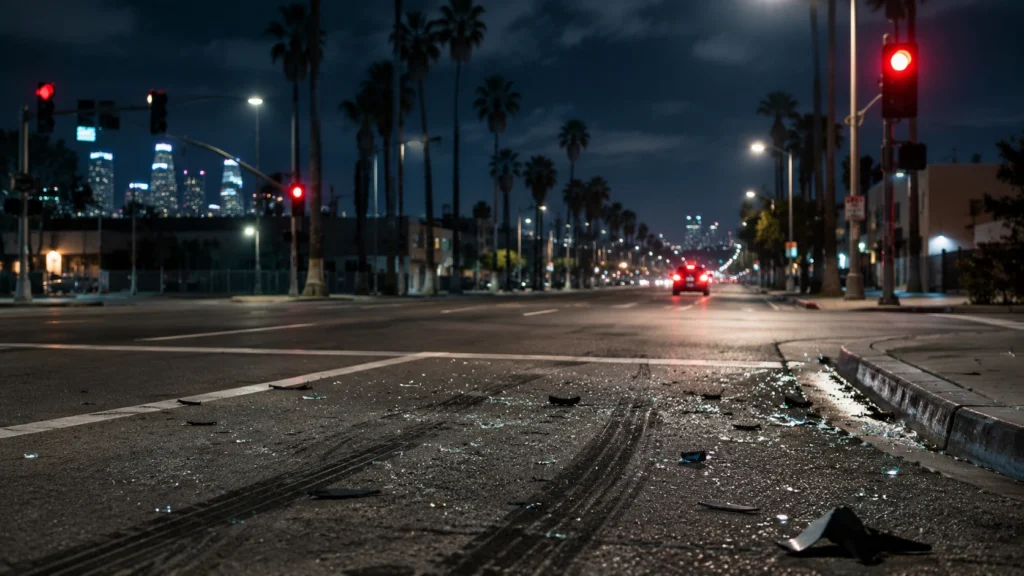
Someone rear-ended you at the light. Before you could get out of the car, they were gone. No plate number caught. No face seen through the tinted windshield. Just the sound of tires and a ringing in your ears.
Hit and run crashes are more common in Los Angeles than in most American cities. LAPD’s traffic division handles thousands of them every year, and the pattern is consistent: a driver panics, a driver has warrants, a driver is uninsured, a driver has been drinking. They flee, and the person left at the scene has to figure out what to do next.
This article walks through how LA hit and run investigations actually work, what evidence detectives look for, and what victims can do to protect themselves whether or not the driver is ever caught.
The First 24 Hours
The first day after a hit and run is when the case is most fluid. Evidence is at its freshest, witnesses are easiest to reach, and the driver has had the least time to conceal what happened.
Practical priorities in that first 24 hours:
Stay at the scene. Even if the other driver has fled, you are legally required to stay and report the incident if there is any property damage or injury. Leaving the scene yourself can expose you to hit and run charges.
Call 911. For injuries, call for medical response. For property damage only, LAPD has a non-emergency reporting line.
Photograph everything before it changes. The debris field, the damage to your vehicle, any paint transfer, the position of your car in the roadway.
Look for witnesses. Other drivers, pedestrians, business employees who saw the impact. Get names and phone numbers.
Scan for cameras. Nearly every LA intersection has at least one nearby business with security cameras. Ring doorbells, ATMs, and delivery bay cameras all can capture the crash and the fleeing driver.
Write down what you remember. The make, color, and any partial plate. The direction the driver fled. What you heard. Memories fade quickly and get worse under stress.
What LAPD Actually Does
Los Angeles has a Central Traffic Division and specialized hit and run detectives. The workload is significant. Not every case gets a full investigative response, but injury and fatality hit and runs are prioritized.
The typical investigative steps include:
Scene canvassing. Officers or detectives return to the scene during the same time of day the crash occurred, looking for witnesses who were there and might be back.
Traffic camera review. LADOT operates a growing network of traffic cameras, though coverage varies by intersection. When cameras exist, footage is pulled and reviewed.
Business camera collection. Detectives contact nearby businesses to request security footage. This has become the single most productive evidence source in LA hit and run cases.
License plate reader (ALPR) queries. LAPD uses automated license plate reader data to look for matches to any partial plate captured at the scene.
Body shop subpoenas. California’s Bureau of Automotive Repair (BAR) database tracks vehicles brought in for major repairs. Detectives can subpoena records looking for vehicles with damage patterns matching the crash.
Social media monitoring. Some drivers make the mistake of posting about the incident or repairs. Detectives sometimes find leads this way.
Paint transfer analysis. When the fleeing vehicle leaves paint on the victim’s vehicle, forensic analysis can identify the make and color of the fleeing vehicle.
What the Law Says About Hit and Run
California Vehicle Code section 20001 makes it a felony to leave the scene of an accident that resulted in injury or death. Penalties can include state prison time, substantial fines, and license revocation.
California Vehicle Code section 20002 covers hit and run where only property damage occurred. This is typically a misdemeanor, with fines and up to six months in jail.
Regardless of whether the driver is caught, the criminal charges are separate from any civil claim you might have for damages.
Uninsured Motorist Coverage: The Backup Plan
Even if the fleeing driver is never identified, you may still be able to recover under your own auto insurance policy. California requires insurers to offer uninsured motorist (UM) coverage as part of every auto policy. If you have UM coverage, a hit and run is generally treated as an uninsured motorist claim.
Under California Insurance Code section 11580.2, UM coverage applies when:
- You are injured
- The other vehicle cannot be identified
- There is physical contact between the vehicles (this requirement is strict)
The physical contact requirement is where hit and run UM claims often stumble. A “phantom vehicle” that runs another driver off the road without physical contact does not qualify under standard UM coverage. Physical contact between the fleeing vehicle and your vehicle is generally required.
If you have underinsured motorist (UIM) coverage, that can also come into play if the fleeing driver is eventually identified but carries insufficient insurance.
CalVCB: The Government Safety Net
For victims who cannot recover through UM coverage or civil litigation, the California Victim Compensation Board (CalVCB) offers a limited government program. CalVCB can pay for:
- Medical treatment
- Mental health counseling
- Lost income
- Funeral expenses
- Residential relocation for safety
The program has strict eligibility requirements and reimburses only certain expenses. It is not a substitute for a civil claim, but it can help with immediate medical costs when insurance is not enough.
The Civil Case When the Driver Is Caught
If the fleeing driver is identified, either through police investigation or private effort, a civil claim becomes possible. These claims often involve:
- The at-fault driver’s auto insurance (if any)
- Punitive damages for the flight itself (under Civil Code 3294)
- Vicarious liability if the driver was in a work vehicle
- Family liability if the driver was using a family member’s car under California’s permissive user rule
Punitive damages are particularly significant in hit and run cases. Fleeing the scene of an injury crash is the kind of conduct California courts have found to meet the “malice” standard under Civil Code 3294. This can substantially increase the value of the case.
Wrongful Death Hit and Runs
The most serious hit and run cases involve fatalities. Under California’s wrongful death law, surviving family members can pursue civil claims for economic damages (lost financial support, funeral expenses) and non-economic damages (loss of love, companionship, care).
Fatal hit and runs receive priority investigation from LAPD, and often generate community pressure that helps identify the driver. Civil claims in these cases can proceed even when the criminal case moves slowly.
What Victims Should Do Right Now
If you have been hit by a driver who fled:
Get medical care. Even if you feel okay, get evaluated. Adrenaline masks injuries.
File a police report. Do this today, not next week.
Notify your insurance company. Not with a recorded statement, but with a report of the incident.
Preserve any evidence. Save the photos. Save the witness contact info. Save any surveillance footage you can obtain.
Talk to a lawyer. Car accident cases involving hit and run add complexity to what would otherwise be a straightforward claim. UM coverage, CalVCB, and eventual civil recovery all involve different processes.
At Ask Hamlet, our team handles hit and run cases across Los Angeles. We work with LAPD, with insurance companies on UM claims, and with private investigators when helpful. The case is often not over just because the driver drove away.
If the driver is found, they may try to put part of the blame on you. Being partly at fault does not end your claim, and our guide to California’s pure comparative fault rule explains why.
If you have been the victim of a hit and run, contact us for a free case review. There is no obligation. We do not charge unless we win.